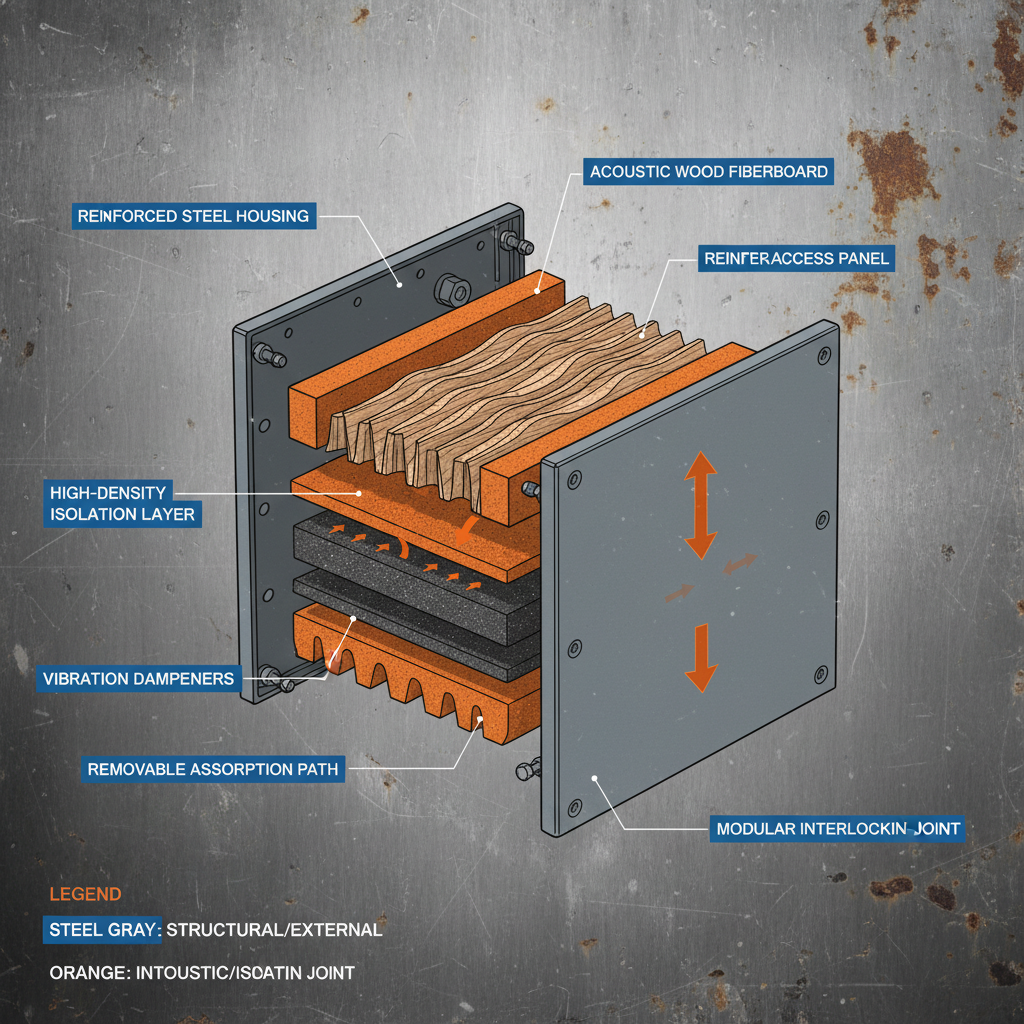
Integrating acoustic functionality with aesthetic appeal has become a priority in modern interior design, leading many to explore how to make sound absorbing wall art to solve noise pollution in living and working spaces. By combining porous materials with visual creativity, homeowners and designers can mitigate echo and reverberation without sacrificing the style of their environment.
Understanding the science of sound absorption is the first step toward creating effective acoustic art. Unlike soundproofing, which blocks noise from entering or leaving a room, absorbing art focuses on managing the sound already present, preventing it from bouncing off hard surfaces like concrete or glass, which often leads to a "hollow" sounding room.
Whether you are a DIY enthusiast or a professional interior architect, mastering the process of creating acoustic panels allows for a customizable approach to auditory comfort. From using felt acoustic wall panels to experimenting with wooden slats, the possibilities for enhancing a space's sonic profile while adding a sophisticated visual element are virtually endless.


In an increasingly urbanized world, noise pollution has been recognized by the World Health Organization (WHO) as a significant environmental risk to physical and mental health. As open-concept offices and minimalist home designs—characterized by hard floors and bare walls—become the global standard, the prevalence of "flutter echo" has increased. This creates an urgent demand for intuitive solutions on how to make sound absorbing wall art that can serve both a health-conscious and aesthetic purpose.
The intersection of architectural acoustics and fine art allows for a seamless transition between industrial utility and residential comfort. By implementing sound-dampening art, organizations can reduce cognitive load for employees and improve the overall quality of life for residents in high-density cities, transforming chaotic auditory environments into serene, controlled spaces.
No, it is important to distinguish between absorption and blocking. Sound absorbing wall art reduces the echo and reverberation inside a room, making it sound "drier" and clearer. To stop noise from passing through a wall (soundproofing), you would need mass-loaded vinyl or additional wall layers to create a physical barrier.
For most beginners, high-density recycled polyester felt is the best choice because it is easy to cut, safe to handle, and aesthetically versatile. For those needing professional-grade bass absorption, rockwool or mineral wool is superior, though it requires a secure fabric wrap to prevent fibers from entering the air.
A general rule of thumb is to cover 20-30% of the wall surface area in a room to significantly reduce echo. Focus on "first reflection points"—the areas on the walls directly between the sound source (like speakers) and the listener—to get the most impact from a few pieces of art.
Standard canvas art is generally too thin to absorb significant sound and can sometimes act as a drumhead, actually resonating. However, you can transform a canvas piece into acoustic art by stuffing the hollow back of the frame with 2-4 inches of acoustic foam or felt before hanging it.
Most professional acoustic art, especially those made from polyester felt or treated fabrics, can be cleaned with a vacuum cleaner using a brush attachment. For fabric-wrapped panels, a light steaming or spot-cleaning with a mild detergent is usually sufficient to maintain their appearance.
Yes. Acoustic foam is typically an open-cell polyurethane that is excellent for high-frequency flutter but can look "industrial." Acoustic felt is a compressed fiber material that is denser, more durable, and much easier to integrate into artistic designs, making it the preferred choice for modern interior decor.
Mastering how to make sound absorbing wall art represents a perfect synergy between scientific utility and creative expression. By selecting the right materials—from high-density felt to architectural wooden slats—and understanding the principles of NRC and sound reflection, anyone can transform a noisy, distracting environment into a balanced auditory sanctuary that promotes health, focus, and elegance.
As we move toward a more sustainable and wellness-oriented approach to architecture, the integration of acoustic art will evolve from a luxury to a necessity. We encourage designers and homeowners to experiment with modular and eco-friendly materials to create spaces that sound as good as they look. To explore professional-grade materials and inspiration for your next project, visit our website: www.ytakupanel.com

 Afrikaans
 Albanian
 Amharic
 Arabic
 Armenian
 Azerbaijani
 Basque
 Belarusian
 Bengali
 Bosnian
 Bulgarian
 Catalan
 Cebuano
 Corsican
 Croatian
 Czech
Czech
 Danish
 Dutch
Dutch
 Esperanto
 Estonian
 Finnish
 French
 Frisian
 Galician
 Georgian
 German
 Greek
Greek
 Gujarati
 Haitian Creole
 Hausa
Hausa
 Hawaiian
 Hebrew
 Hindi
Hindi
 Miao
Miao
 Hungarian
 Icelandic
 Igbo
Igbo
 Indonesian
 Irish
Irish
 Italian
 Japanese
 Javanese
 Kannada
 Kazakh
 Khmer
Khmer
 Rwandese
 Korean
 Kurdish
 Kyrgyz
 Lao
Lao
 Latin
Latin
 Latvian
 Lithuanian
 Luxembourgish
 Macedonian
 Malgashi
 Malay
Malay
 Malayalam
 Maltese
 Maori
Maori
 Marathi
 Mongolian
 Myanmar
 Nepali
 Norwegian
 Norwegian
 Occitan
 Pashto
 Persian
 Polish
 Portuguese
 Punjabi
 Romanian
 Russian
 Samoan
 Scottish Gaelic
 Serbian
 Sesotho
 Shona
Shona
 Sindhi
 Sinhala
 Slovak
 Slovenian
 Somali
 Spanish
 Sundanese
 Swahili
 Swedish
 Tagalog
 Tajik
Tajik
 Tamil
Tamil
 Tatar
Tatar
 Telugu
 Thai
Thai
 Turkish
 Turkmen
 Ukrainian
 Urdu
Urdu
 Uighur
 Uzbek
Uzbek
 Vietnamese
 Welsh
Welsh
 Bantu
Bantu
 Yiddish
 Yoruba
 Zulu
Zulu
 English