Achieving a quiet, focused environment shouldn't require a professional studio budget. Many homeowners and DIY enthusiasts are searching for how to make cheap sound absorbing panels to tackle echo and noise pollution in home offices, bedrooms, or gaming rooms. By understanding the basics of acoustic absorption, anyone can transform a noisy space into a serene sanctuary using accessible materials.
The science behind sound absorption is relatively straightforward: it involves converting sound energy into heat through friction within a porous material. When we discuss how to make cheap sound absorbing panels, we are looking at ways to implement this science without spending thousands on high-end architectural acoustic treatments. From recycled textiles to mineral wool, the options are surprisingly diverse.
Whether you are a content creator looking to improve your audio quality or a remote worker trying to block out household distractions, learning how to make cheap sound absorbing panels provides an empowering, cost-effective solution. This guide will walk you through the materials, methods, and strategic placements necessary to optimize your room's acoustics on a budget.

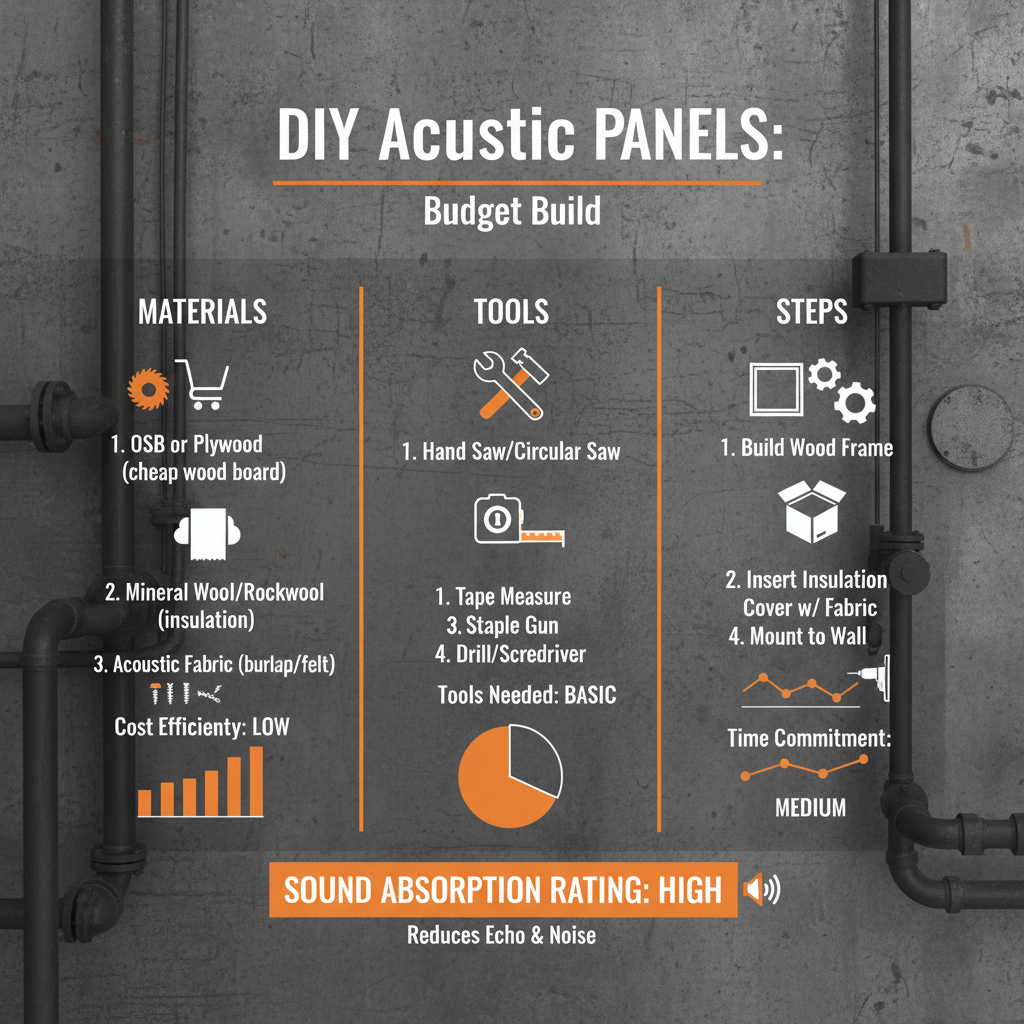
To understand how to make cheap sound absorbing panels, one must first differentiate between soundproofing (blocking sound from entering or leaving a room) and sound absorption (reducing echo within a room). Absorption focuses on removing "flutter echo" and reverberation, which occurs when sound waves bounce off hard surfaces like concrete or glass. By introducing porous materials, these waves are trapped and dissipated.
The efficiency of a budget panel depends largely on the density and thickness of the core material. While professional panels use rigid fiberglass, a DIY approach can utilize recycled cotton or high-density foam. The goal is to create a "sonic sponge" that captures mid-to-high frequencies, significantly improving the clarity of speech and music within the space.
The most cost-effective high-performance material is typically mineral wool or rockwool. However, if you are looking for the absolute lowest cost, using recycled denim or thick moving blankets wrapped in fabric can work for high-frequency echoes. For a balance of cost and professional performance, recycled PET felt is an excellent modern alternative.
It is important to distinguish between absorption and blocking. DIY sound absorbing panels are designed to reduce echo (reverberation) inside the room. They will not stop loud noises from neighbors or street traffic entirely, as that requires "mass" (like heavy drywall or MLV). However, they do make the room feel quieter by eliminating the internal bouncing of sound.
A general rule of thumb for a small home studio or office is to cover about 20% to 30% of the wall surface area. Focus on the "first reflection points"—the areas of the wall directly between you and your sound source. Adding 4 to 6 medium-sized panels is usually enough to notice a dramatic difference in audio clarity.
Mineral wool is safe as long as it is properly encapsulated. The core of the panel should be tightly wrapped in a breathable fabric to prevent fibers from entering the air. It is recommended to wear a mask and gloves during the assembly process, but once the panel is wrapped and mounted, it poses no risk to the occupants of the room.
Contrary to popular belief, egg cartons are not effective for sound absorption. They are too thin to absorb low or mid frequencies and are made of material that doesn't have the porous density required. While they might slightly diffuse high-frequency sounds, they are not a viable substitute for actual sound absorbing panels and can be a fire hazard.
The best way to maintain DIY panels is through regular vacuuming with a brush attachment to remove dust from the fabric surface. Since the fabric is stapled to the frame, you cannot machine wash them. If a stain occurs, spot-clean with a damp cloth and mild detergent, ensuring you don't soak the absorbent core material.
Mastering how to make cheap sound absorbing panels is a practical intersection of acoustic science and DIY creativity. By selecting the right porous materials, constructing simple breathable frames, and strategically placing them at reflection points, anyone can significantly upgrade their sonic environment. From using mineral wool for high-performance needs to recycled felt for sustainable goals, the path to a quieter space is accessible and affordable.
As we move toward a more hybrid world of work and home, the ability to control our acoustic surroundings becomes a vital part of mental well-being and professional productivity. Whether you are building a professional podcast booth or simply wanting a quieter bedroom, these budget-friendly solutions offer a high return on investment. For more professional guidance and high-quality acoustic materials, visit our website: www.ytakupanel.com

 Afrikaans
 Albanian
 Amharic
 Arabic
 Armenian
 Azerbaijani
 Basque
 Belarusian
 Bengali
 Bosnian
 Bulgarian
 Catalan
 Cebuano
 Corsican
 Croatian
 Czech
Czech
 Danish
 Dutch
Dutch
 Esperanto
 Estonian
 Finnish
 French
 Frisian
 Galician
 Georgian
 German
 Greek
Greek
 Gujarati
 Haitian Creole
 Hausa
Hausa
 Hawaiian
 Hebrew
 Hindi
Hindi
 Miao
Miao
 Hungarian
 Icelandic
 Igbo
Igbo
 Indonesian
 Irish
Irish
 Italian
 Japanese
 Javanese
 Kannada
 Kazakh
 Khmer
Khmer
 Rwandese
 Korean
 Kurdish
 Kyrgyz
 Lao
Lao
 Latin
Latin
 Latvian
 Lithuanian
 Luxembourgish
 Macedonian
 Malgashi
 Malay
Malay
 Malayalam
 Maltese
 Maori
Maori
 Marathi
 Mongolian
 Myanmar
 Nepali
 Norwegian
 Norwegian
 Occitan
 Pashto
 Persian
 Polish
 Portuguese
 Punjabi
 Romanian
 Russian
 Samoan
 Scottish Gaelic
 Serbian
 Sesotho
 Shona
Shona
 Sindhi
 Sinhala
 Slovak
 Slovenian
 Somali
 Spanish
 Sundanese
 Swahili
 Swedish
 Tagalog
 Tajik
Tajik
 Tamil
Tamil
 Tatar
Tatar
 Telugu
 Thai
Thai
 Turkish
 Turkmen
 Ukrainian
 Urdu
Urdu
 Uighur
 Uzbek
Uzbek
 Vietnamese
 Welsh
Welsh
 Bantu
Bantu
 Yiddish
 Yoruba
 Zulu
Zulu
 English