
Integrating custom sound absorbing panels into modern architectural design is no longer just about noise reduction; it is about optimizing the acoustic environment for human productivity and comfort. In the non-metallic mineral products industry, the shift toward specialized acoustic solutions has enabled spaces to balance aesthetic appeal with precise sound control, moving beyond generic foam to high-performance engineered materials.
The primary challenge for designers and facility managers is often the conflict between visual identity and sonic functionality. Standard panels frequently fail to address specific frequency absorption needs or clash with the interior design language, leading to spaces that are either acoustically dead or visually uninspiring.
This analysis provides a professional framework for evaluating customized acoustic solutions, focusing on material composition, technical specifications, and the decision-making process for selecting high-performance sound absorption systems tailored to specific spatial requirements.

The Mechanics of Custom Sound Absorption

Custom sound absorbing panels operate on the principle of converting sound energy into heat through friction. When sound waves strike a porous material, the air molecules vibrate within the fibers, and this mechanical energy is dissipated. The effectiveness of this process depends heavily on the material's density, thickness, and the air gap between the panel and the mounting surface.
Unlike soundproofing, which aims to block sound from entering or leaving a room, sound absorption focuses on reducing reverberation and echoes within the space. Customization allows for the tuning of the absorption coefficient to target specific frequency ranges, such as the low-frequency rumble of machinery or the high-frequency chatter of a crowded office.
Material Synergy: Polyester Fiber and Wood Slats
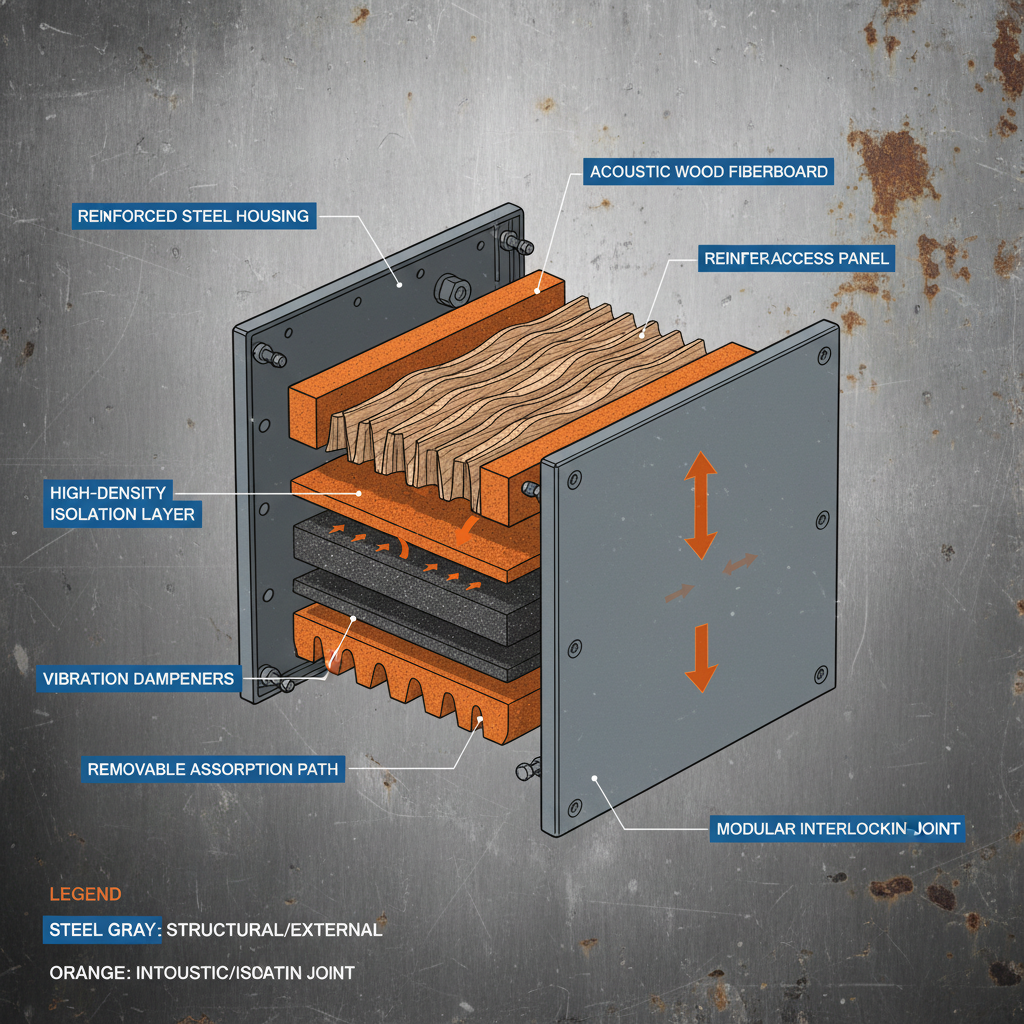
The integration of 100% polyester fiber with MDF or solid wood slats creates a hybrid system that addresses both absorption and diffusion. The recycled polyester backing serves as the primary absorbent core, trapping sound waves, while the wooden slats act as diffusers, breaking up direct reflections to prevent "flutter echo" without making the room feel acoustically stifled.
Technical specifications such as E0, E1, and E2 grade MDF ensure that the panels meet varying environmental safety standards regarding formaldehyde emissions. By offering a variety of veneers and HPL boards—ranging from Oak and Walnut to Maple—these systems allow for a seamless blend of industrial performance and high-end interior design.
Application-Specific Acoustic Deployment
Different environments require distinct acoustic strategies. In home theaters and game rooms, the priority is usually the elimination of standing waves and bass build-up, necessitating thicker panels with higher density. In professional office spaces and public areas, the focus shifts toward speech intelligibility and the reduction of ambient noise levels to improve concentration.
The flexibility of custom sizes (such as 2400x400x21mm or 2400x600x21mm) allows these panels to be affixed to both walls and ceilings. This dual-surface deployment is critical in rooms with high ceilings or hard flooring, where sound tends to bounce vertically, creating a disjointed auditory experience.
Comparative Performance Metrics by Space Type
To understand the impact of custom sound absorbing panels, it is useful to evaluate the relative priority of acoustic factors across different common applications. The following conceptual framework illustrates how different spaces prioritize absorption versus diffusion.
As shown in the relative index, professional studios and home theaters require a higher balance of absorption to control low-frequency energy, whereas public spaces and living areas prioritize a mix of diffusion and absorption to maintain a natural sound while reducing echo.
Evaluating Customization Dimensions
When specifying custom panels, buyers must look beyond the surface color. The fireproof grade (such as Grade B1) is a critical compliance factor for commercial projects, ensuring that the materials meet safety regulations for public buildings. Weight considerations, typically around 8.5kgs/M2, also influence the choice of installation hardware and the structural capacity of the ceiling.
Furthermore, the ability to provide OEM/ODM services allows businesses to integrate their own logos or unique design patterns into the panels. This is particularly valuable for brand-focused retail environments or corporate headquarters where the acoustic solution must also function as a piece of corporate branding.
Implementation Risks and Acoustic Pitfalls
A common error in acoustic installation is the "over-damping" of a room. By applying too many high-absorption panels without sufficient diffusion, a space can become unnaturally quiet, leading to a claustrophobic feeling and a loss of audio clarity. This is why the slat-wood design is superior to flat felt; the slats keep some energy in the room, maintaining a lively but controlled atmosphere.
Another risk involves improper mounting. If panels are installed flush against a wall without considering the air gap, the absorption of lower frequencies is significantly reduced. Professional planning should always include a pre-production sample to verify the color match and material density before mass deployment.
Acoustic Solution Selection Framework
Choosing between different types of acoustic treatments requires a balanced look at performance, installation effort, and aesthetic goals. The following table compares the primary custom sound absorbing panel configurations based on operational needs.
| Panel Type | Primary Function | Ideal Application | Installation Ease |
|---|---|---|---|
| Slat Wood Panel | Absorption + Diffusion | Living Rooms / Offices | High (Accessories) |
| Pure Felt Panel | High Absorption | Recording Booths | Very High |
| Perforated Wood | Mid-Freq Control | Auditoriums | Medium |
| Fabric Wrapped | Broadband Control | Home Theaters | Medium |
| HPL Faced Slat | Durability + Sound | Public Corridors | High |
| Custom Hybrid | Targeted Tuning | Professional Studios | Medium |
For most commercial and residential applications, the combination of polyester fiber and wooden slats provides the most versatile result, balancing the needs of the ear and the eye while ensuring a quick installation process.
Frequently Asked Questions
Yes, these panels are designed for both wall and ceiling applications. When installing on ceilings, it is recommended to use the specific accessories provided to ensure secure mounting and to maintain the necessary air gap for optimal low-frequency absorption.
Sound absorption (which these panels provide) reduces echoes and reverberation within a room to improve sound quality. Soundproofing involves adding mass to walls to block sound from passing between rooms entirely.
Yes, the backing felt is produced from recycled materials (100% polyester fiber), and the wood slats are available in various grades (E0, E1, E2) to control formaldehyde emissions, making them suitable for indoor air quality standards.
We offer a wide range of standard colors including Oak, Walnut, Cherry, and Matte Black. For specific brand requirements, custom colors and HPL boards can be produced. We recommend requesting free samples to verify the look under your actual room lighting.
Lead times vary based on order volume and customization complexity. Since we are a professional manufacturer with our own factory, we can manage the process from pre-production samples to mass production and shipping from Shanghai/Ningbo ports efficiently.
While these panels primarily improve the interior sound quality by reducing echoes, they can help minimize the perceived noise level by preventing sound from bouncing around the room, although they are not a replacement for structural sound-blocking walls.
Conclusion
The selection of custom sound absorbing panels is a critical intersection of acoustic engineering and interior design. By utilizing hybrid materials like recycled polyester fiber and graded wood slats, it is possible to achieve a professional sonic environment that enhances speech clarity and reduces noise fatigue without sacrificing visual aesthetics. The key to success lies in matching the panel specifications—density, size, and fire rating—to the specific needs of the application.
For organizations and designers looking to implement a tailored acoustic strategy, reviewing technical capacities and requesting samples is the most effective first step. Detailed product information and customization options can be explored at www.ytakupanel.com to ensure the chosen solution meets both performance and compliance standards.




 English
 Afrikaans
 Albanian
 Amharic
 Arabic
 Armenian
 Azerbaijani
 Basque
 Belarusian
 Bengali
 Bosnian
 Bulgarian
 Catalan
 Cebuano
 Corsican
 Croatian
 Czech
 Danish
 Dutch
 Esperanto
 Estonian
 Finnish
 French
 Frisian
 Galician
 Georgian
 German
 Greek
 Gujarati
 Haitian Creole
 Hausa
 Hawaiian
 Hebrew
 Hindi
 Miao
 Hungarian
 Icelandic
 Igbo
 Indonesian
 Irish
 Italian
 Japanese
 Javanese
 Kannada
 Kazakh
 Khmer
 Rwandese
 Korean
 Kurdish
 Kyrgyz
 Lao
 Latin
 Latvian
 Lithuanian
 Luxembourgish
 Macedonian
 Malgashi
 Malay
 Malayalam
 Maltese
 Maori
 Marathi
 Mongolian
 Myanmar
 Nepali
 Norwegian
 Norwegian
 Occitan
 Pashto
 Persian
 Polish
 Portuguese
 Punjabi
 Romanian
 Russian
 Samoan
 Scottish Gaelic
 Serbian
 Sesotho
 Shona
 Sindhi
 Sinhala
 Slovak
 Slovenian
 Somali
 Spanish
 Sundanese
 Swahili
 Swedish
 Tagalog
 Tajik
 Tamil
 Tatar
 Telugu
 Thai
 Turkish
 Turkmen
 Ukrainian
 Urdu
 Uighur
 Uzbek
 Vietnamese
 Welsh
 Bantu
 Yiddish
 Yoruba
 Zulu