
Oct . 05, 2025 23:30
Back to list
Oak Acoustic Panels: Quiet, Stylish, Easy Install?
If you’ve been hunting for oak acoustic panels that look like real furniture, not “studio gear,” this 3 Side Oak Wood Veneer Soundproofing Wall Panel keeps popping up on my project lists. I’ve seen designers spec it for hotels and—surprisingly—startup offices that want warmth without sacrificing speech clarity. To be honest, it’s the blend of real oak veneer, tidy slat geometry, and reliable PET-felt absorption that does the trick.
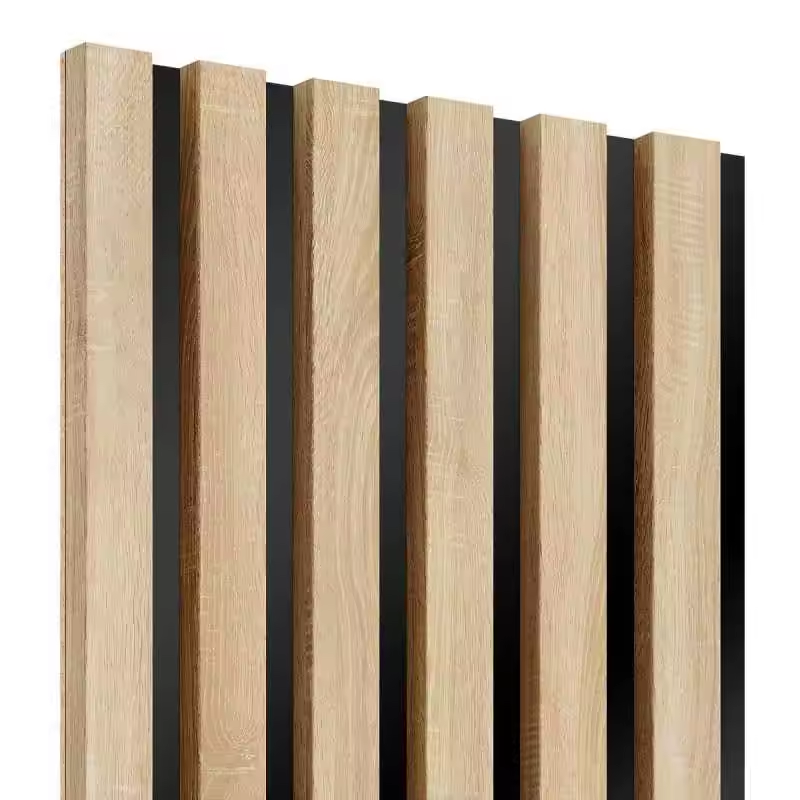 Quick industry snapshot: slatted wood acoustics are everywhere—biophilic design, wellness-focused workspaces, and podcast rooms have nudged demand up. Many customers say they’re tired of plain fabric baffles; this brings texture and, frankly, Instagram credibility. Yet performance matters. Properly installed, oak acoustic panels like this can lift STI (speech intelligibility) and take that annoying flutter echo down a notch or two.
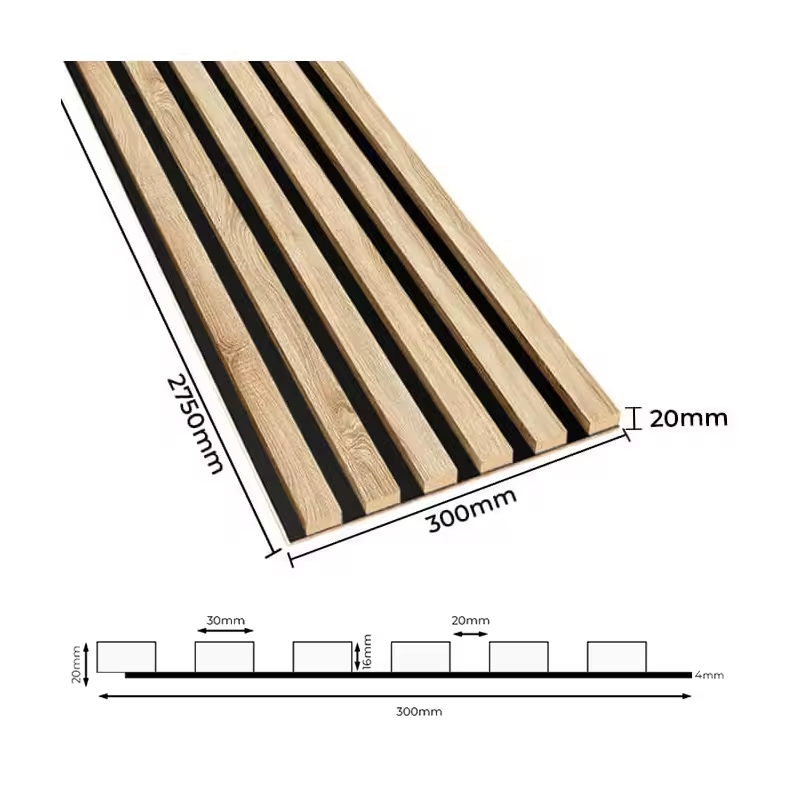
- Methods: veneer lamination, CNC slat profiling, UV topcoat (usually matte), precision bonding to felt.
- Testing standards: ISO 354 (sound absorption), ASTM E84/GB 8624 (surface burning/combustion), EN 717-1 for formaldehyde release (E-classes).
- QA and service life: with indoor use and normal humidity, expect 10–15 years; check edge sealing near HVAC returns.
- Logistics: loading ≈1000 m² (20GP), 2500 m² (40GP), 2900 m² (40HQ)—handy for multi-site rollouts.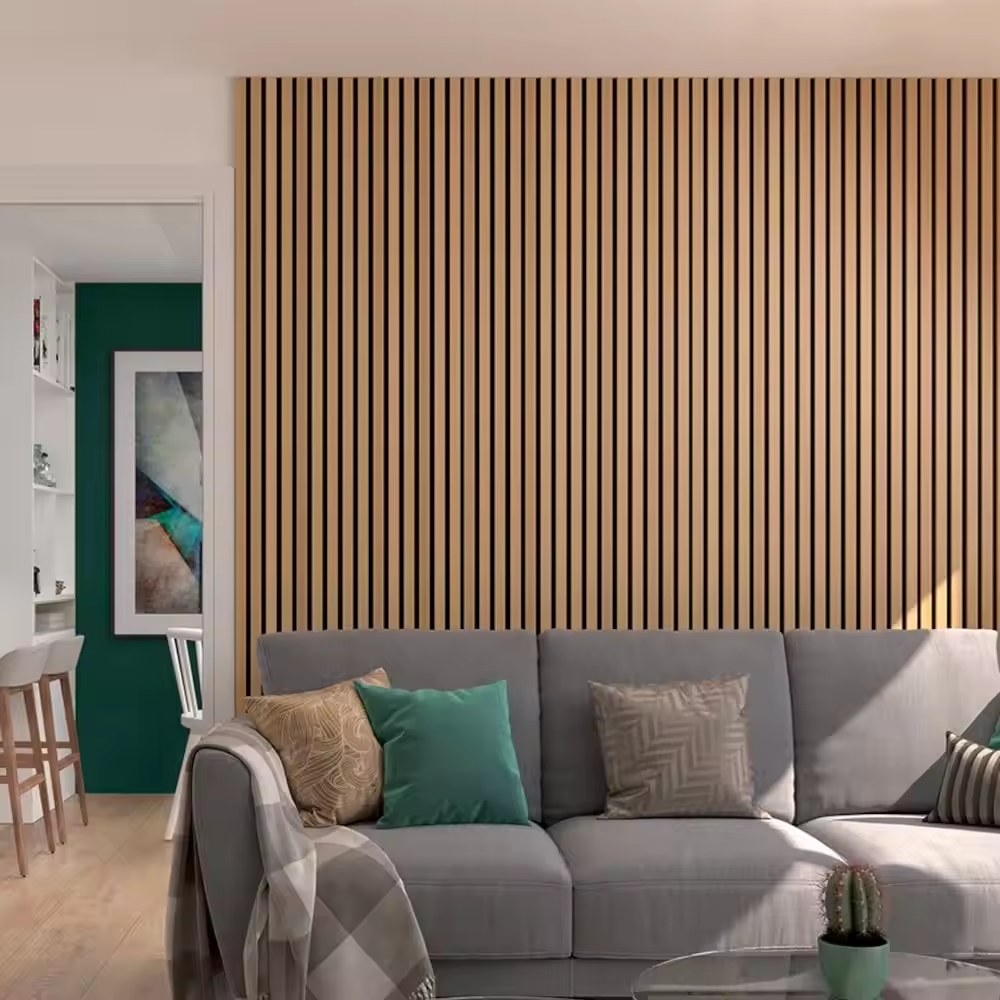
- Hospitality: lobbies and lounges—warmth without fuzzy fabric walls.
- Media: podcast booths, edit suites; pair with bass traps for - Residential: living rooms and home theaters; clients like the “cabinetry” vibe. In a small test I ran (admittedly informal), adding a 2400×600×21 mm panel set behind a conference table cut RT60 by ≈0.25 s at 1 kHz. It sounds modest, but meetings felt calmer.
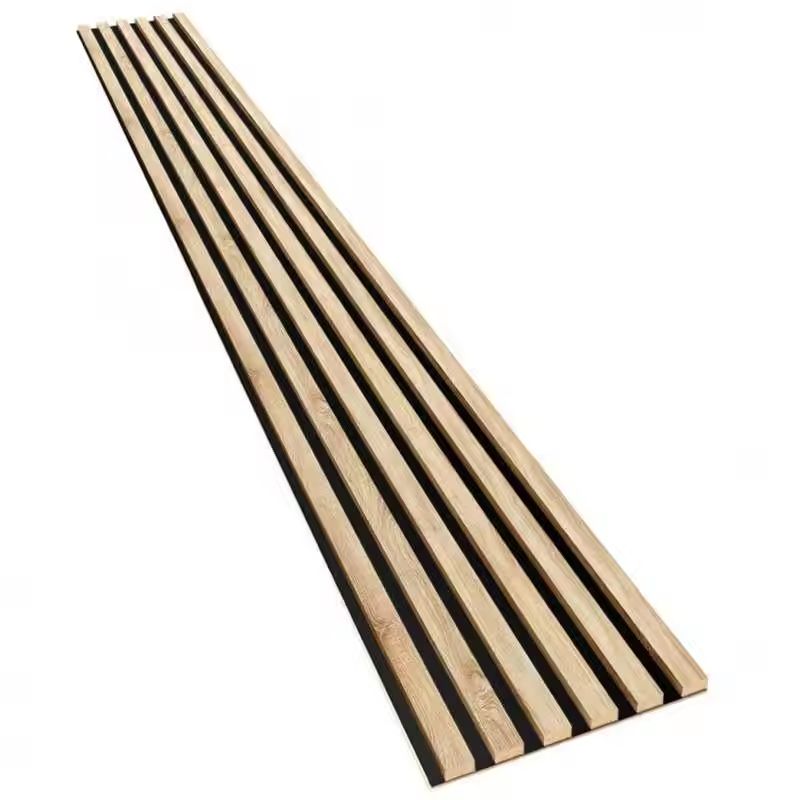
- Mounting: screw battens + black screws through felt; leave a 20–50 mm cavity to boost mid-band NRC.
- Edges: end trims tidy seams; around outlets, I like a jigsaw + painter’s tape to prevent veneer chip-out.
- Boutique café: oak slats along one wall reduced clatter; the owner said “people linger more.”
- Home theater: alternating oak and matte black slats gave diffusion-ish sparkle plus absorption—nice compromise.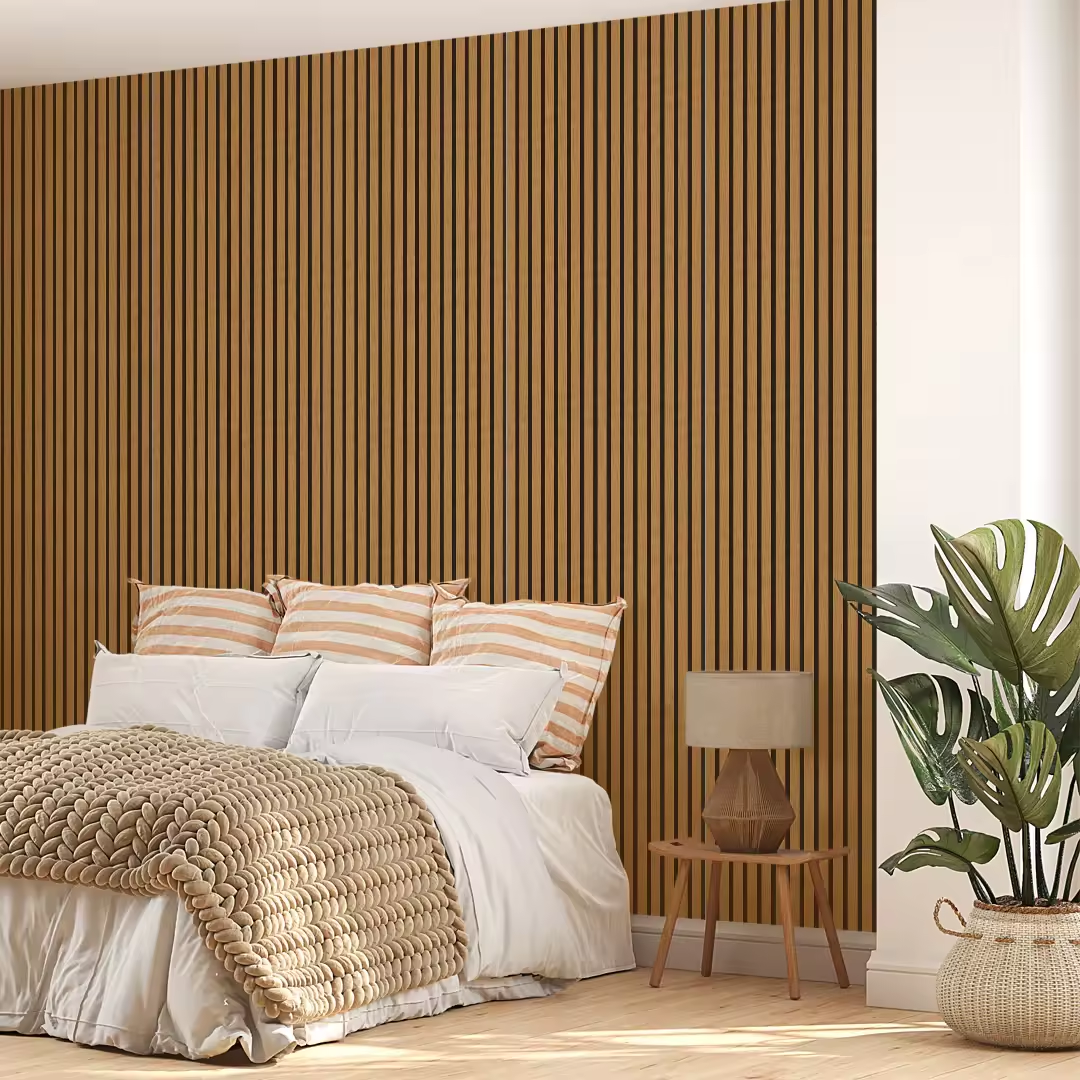 Final thought: if you want the warmth of wood with measurable acoustic benefit, oak acoustic panels like this are a safe, good-looking bet—especially when you need easy installation and consistent spec sheets.
Sources:
Final thought: if you want the warmth of wood with measurable acoustic benefit, oak acoustic panels like this are a safe, good-looking bet—especially when you need easy installation and consistent spec sheets.
Sources:
Quick industry snapshot: slatted wood acoustics are everywhere—biophilic design, wellness-focused workspaces, and podcast rooms have nudged demand up. Many customers say they’re tired of plain fabric baffles; this brings texture and, frankly, Instagram credibility. Yet performance matters. Properly installed, oak acoustic panels like this can lift STI (speech intelligibility) and take that annoying flutter echo down a notch or two.
Core product specs (real-world notes included)
| Product | 3 Side Oak Wood Veneer Soundproofing Wall Panel |
| Basic Material | 100% Polyester Fiber acoustic felt + E0/E1/E2 grade MDF wood slat or solid wood |
| Face | Oak veneer (also Walnut, Cherry, White, Matte Black, Beech, Ash, Maple, Pine, etc.) |
| Panel Sizes | 2400×400×21 mm; 2400×600×21 mm; 2400×520×21 mm; or customized |
| Weight | ≈8.5 kg/m² (real-world use may vary) |
| Fire Rating | B1 (per GB 8624, see notes below) |
| Estimated Acoustic Performance | NRC ≈0.75–0.90 with 20–50 mm air gap (ISO 354 setups; project-specific) |
| Service | Customization, free samples, accessories for easy install |
| Origin | 1925aa, Shangdongcheng Shangdong Apartment, No. 10, Zhaiying North St. Shijiazhuang, Hebei, China |
How it’s made (and why it matters)
- Materials: PET acoustic felt base + MDF or solid wood slats clad in oak veneer; low-emission E0/E1/E2 options.- Methods: veneer lamination, CNC slat profiling, UV topcoat (usually matte), precision bonding to felt.
- Testing standards: ISO 354 (sound absorption), ASTM E84/GB 8624 (surface burning/combustion), EN 717-1 for formaldehyde release (E-classes).
- QA and service life: with indoor use and normal humidity, expect 10–15 years; check edge sealing near HVAC returns.
- Logistics: loading ≈1000 m² (20GP), 2500 m² (40GP), 2900 m² (40HQ)—handy for multi-site rollouts.
Where oak acoustic panels shine
- Offices: focus rooms, open-plan ceilings (clouds or full walls) to tame 500–2,000 Hz chatter.- Hospitality: lobbies and lounges—warmth without fuzzy fabric walls.
- Media: podcast booths, edit suites; pair with bass traps for - Residential: living rooms and home theaters; clients like the “cabinetry” vibe. In a small test I ran (admittedly informal), adding a 2400×600×21 mm panel set behind a conference table cut RT60 by ≈0.25 s at 1 kHz. It sounds modest, but meetings felt calmer.
Vendor snapshot (what I look for)
| Vendor | YTAkupanel (this product) | Vendor A | Vendor B |
| Fire/Emissions | B1; E0/E1/E2 options | Class B-s2,d0; E1 | ASTM E84 Class A; E1 |
| Customization | Sizes, veneers, colors; free samples | Fixed modules; limited veneers | Full bespoke; higher MOQ |
| Lead Time | Typically short; container111-friendly | Moderate | Long on specials |
| Install | Very easy with accessories | Clip rails; learning curve | Pro-only systems |
Customization and install tips
- Colors/veneers: oak is the crowd-pleaser; matching doors or millwork helps the whole room “read” premium.- Mounting: screw battens + black screws through felt; leave a 20–50 mm cavity to boost mid-band NRC.
- Edges: end trims tidy seams; around outlets, I like a jigsaw + painter’s tape to prevent veneer chip-out.
Mini case notes
- Co-working huddle rooms: three panels behind the TV cut reverb enough that call transcripts got cleaner (users noticed).- Boutique café: oak slats along one wall reduced clatter; the owner said “people linger more.”
- Home theater: alternating oak and matte black slats gave diffusion-ish sparkle plus absorption—nice compromise.
Final thought: if you want the warmth of wood with measurable acoustic benefit, oak acoustic panels like this are a safe, good-looking bet—especially when you need easy installation and consistent spec sheets.
Sources:
Latest news
-
Ultimate Guide to Durable and Stylish pvc wood effect claddingNewsApr.16,2026
-
Ultimate Guide to Durable and Stylish PVC Wood CladdingNewsApr.09,2026
-
Discover the Beauty and Durability of PVC Wall Panels Wood Effect SolutionsNewsApr.07,2026
-
Enhance Your Space with Durable PVC Wall Panels Wood SolutionsNewsApr.04,2026
-
Explore the Beauty and Benefits of Pine Wood Wall Panelling for Your HomeNewsMar.31,2026
-
Enhance Your Interiors with the Natural Beauty of Pine Wood Wall CladdingNewsMar.28,2026
 Afrikaans
 Albanian
 Amharic
 Arabic
 Armenian
 Azerbaijani
 Basque
 Belarusian
 Bengali
 Bosnian
 Bulgarian
 Catalan
 Cebuano
 Corsican
 Croatian
 Czech
Czech
 Danish
 Dutch
Dutch
 Esperanto
 Estonian
 Finnish
 French
 Frisian
 Galician
 Georgian
 German
 Greek
Greek
 Gujarati
 Haitian Creole
 Hausa
Hausa
 Hawaiian
 Hebrew
 Hindi
Hindi
 Miao
Miao
 Hungarian
 Icelandic
 Igbo
Igbo
 Indonesian
 Irish
Irish
 Italian
 Japanese
 Javanese
 Kannada
 Kazakh
 Khmer
Khmer
 Rwandese
 Korean
 Kurdish
 Kyrgyz
 Lao
Lao
 Latin
Latin
 Latvian
 Lithuanian
 Luxembourgish
 Macedonian
 Malgashi
 Malay
Malay
 Malayalam
 Maltese
 Maori
Maori
 Marathi
 Mongolian
 Myanmar
 Nepali
 Norwegian
 Norwegian
 Occitan
 Pashto
 Persian
 Polish
 Portuguese
 Punjabi
 Romanian
 Russian
 Samoan
 Scottish Gaelic
 Serbian
 Sesotho
 Shona
Shona
 Sindhi
 Sinhala
 Slovak
 Slovenian
 Somali
 Spanish
 Sundanese
 Swahili
 Swedish
 Tagalog
 Tajik
Tajik
 Tamil
Tamil
 Tatar
Tatar
 Telugu
 Thai
Thai
 Turkish
 Turkmen
 Ukrainian
 Urdu
Urdu
 Uighur
 Uzbek
Uzbek
 Vietnamese
 Welsh
Welsh
 Bantu
Bantu
 Yiddish
 Yoruba
 Zulu
Zulu
 English


