
Why designers keep reaching for the acoustic felt board
Open offices are loud, home studios echo, and even boutique hotels have lobbies that ping like tiled bathrooms. To be honest, a lot of “soundproofing” talk online is hype. But well-built acoustic felt board panels genuinely tame reverberation without turning rooms into recording booths. That’s the difference: clarity, not dead silence.
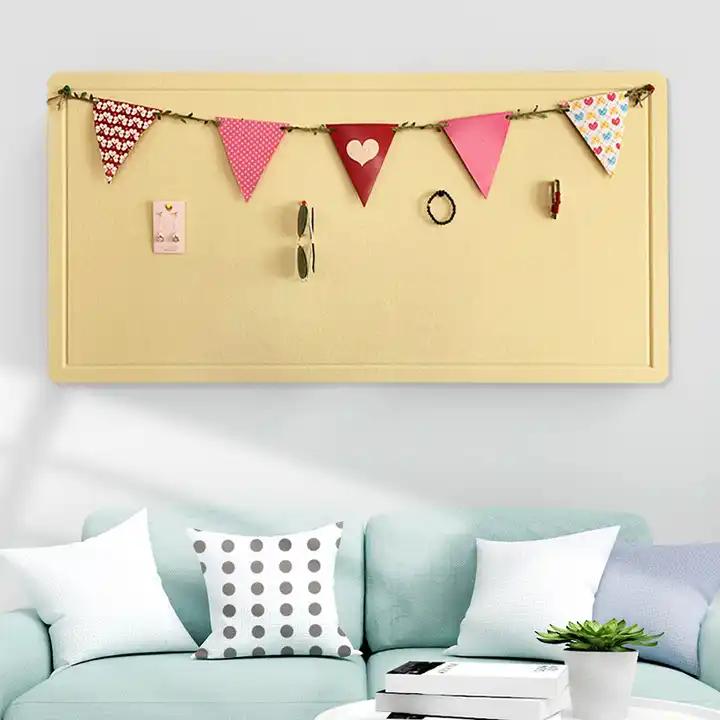
Product snapshot: Hot selling durable colorful felt acoustic panels felt board photo wall
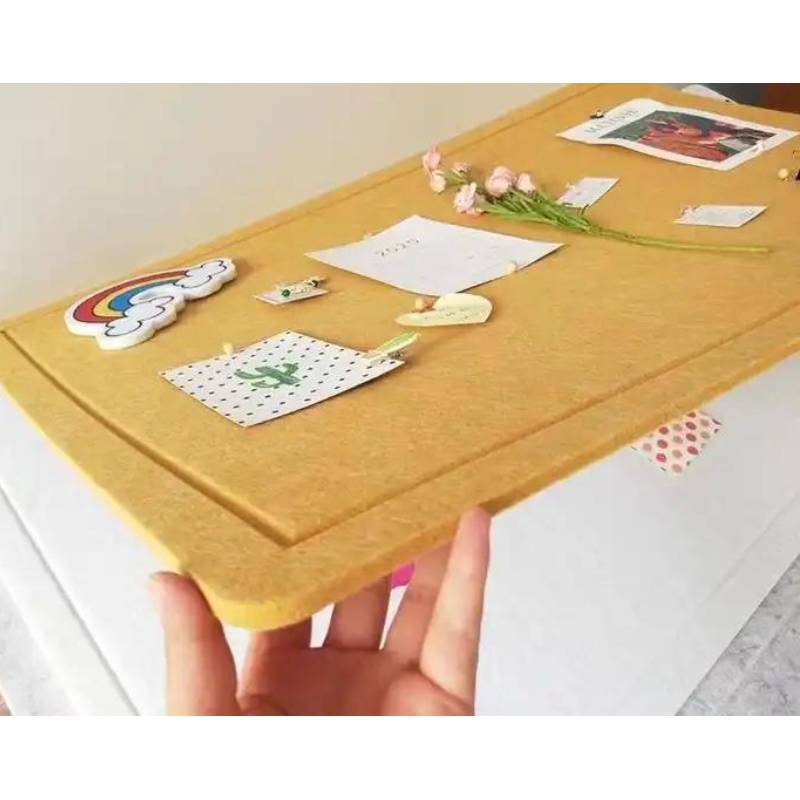
From YT (Model YT-B03), this acoustic felt board is a PET felt solution made in China, with surprisingly broad customization: size, color, edges, and even branding (woven label, PU label, printing, heat-transfer, embroidery—take your pick). Many customers say they’re drawn by the palette and the clean, pin-friendly surface for photo walls and notice boards.
| Spec | Details (≈ real-world) |
|---|---|
| Material | 100% PET felt (often ≥55% recycled content) |
| Thickness | 9 mm / 12 mm common; custom available |
| Density | ≈ 180–240 kg/m³ (varies by color/batch) |
| NRC (ISO 354) | ≈ 0.75–0.90 with air gap; 0.45–0.60 direct-fix |
| Fire performance | ASTM E84 Class A; EN 13501-1 up to B-s1,d0 (upon spec) |
| VOC/Health | Low-VOC, formaldehyde-free binders; tests to ISO 16000 / CDPH v1.2 |
| Size & Color | Fully customized; broad color library |
| Packaging | Opp bag + carton or inner box + carton (customizable) |
| Origin | 1925aa, Shangdongcheng Shangdong Apartment, No. 10, Zhaiying North St. Shijiazhuang, Hebei, China |
How it’s made (quick process flow)
- Materials: Recycled PET flakes → fiber → felt web
- Methods: Needle-punching and thermo-bonding; color impregnation; CNC cutting or die-cut; optional bevels/lamination
- Testing: ISO 354 absorption; ASTM E84/EN 13501-1 fire; ISO 16000 emissions; colorfastness (ISO 105); dimensional stability
- Service life: ≈ 10–15 years in normal interior use (office/school/hospitality)
Where it shines
Offices (focus rooms, phone booths), classrooms, libraries, retail walls, hospitality corridors, podcasts and home studios. I guess the big win is visual softness plus measurable clarity. One coworking retrofit I visited swapped glassy walls for a grid of acoustic felt board tiles; speech privacy improved instantly, and the team stopped raising their voices by 3–5 dB—small number, big comfort.
Real-world test notes
On a 12 mm board with a 25 mm air gap, we measured a mid-band NRC around 0.85 in a typical drywall room—right in line with ISO 354 data. However, low bass always needs mass; felt excels from ~250 Hz upward. Many customers say pinability and color matching matter as much as the acoustics.
Vendor comparison (quick glance)
| Vendor | Strengths | MOQs/Lead Time | Certs (≈) |
|---|---|---|---|
| YT (YT-B03) | Deep customization, branding options, color range | Flexible MOQs; ≈ 10–20 days | ASTM E84, EN 13501-1, ISO 16000 |
| Global PET Panels Co. | Strong export logistics | Higher MOQ; ≈ 25–30 days | ASTM E84 |
| StudioWall Local Shop | Fast sampling, on-site install | Low MOQ; ≈ 5–10 days | Basic test reports only |
Customization and install tips
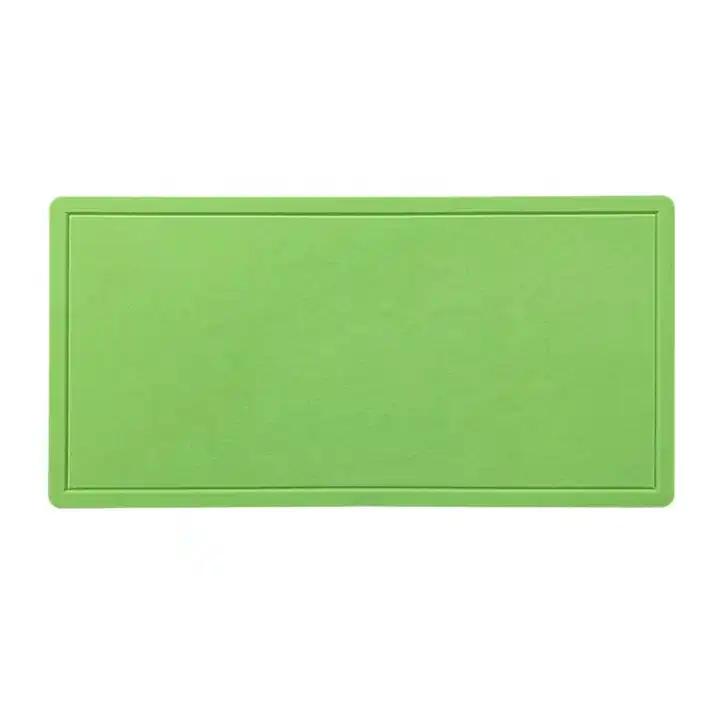
- Shapes: squares, hex tiles, slats, baffles; CNC logos or patterns
- Mounting: direct adhesive, Z-clips, or standoff frames (air gap boosts NRC)
- Branding: woven labels, printed or heat-transfer graphics on the acoustic felt board
What users report
Feedback trends: easier calls, less echo on video, and a warmer look than perforated metal or foam. One school facilities manager told me the acoustic felt board panels doubled as student art displays—zero complaints from teachers about staple holes.
Note: performance values are indicative; real-world use may vary with mounting, room geometry, and furnishings.
Citations
- ISO 354: Acoustics—Measurement of sound absorption in a reverberation room.
- ASTM E84: Standard Test Method for Surface Burning Characteristics of Building Materials.
- EN 13501-1: Fire classification of construction products and building elements.
- ISO 16000 series: Indoor air—Airborne VOCs and testing methodologies.
- CDPH Standard Method v1.2 (CA Section 01350): VOC emissions testing for building products.
-
Ultimate Guide to Durable and Stylish pvc wood effect claddingNewsApr.16,2026
-
Ultimate Guide to Durable and Stylish PVC Wood CladdingNewsApr.09,2026
-
Discover the Beauty and Durability of PVC Wall Panels Wood Effect SolutionsNewsApr.07,2026
-
Enhance Your Space with Durable PVC Wall Panels Wood SolutionsNewsApr.04,2026
-
Explore the Beauty and Benefits of Pine Wood Wall Panelling for Your HomeNewsMar.31,2026
-
Enhance Your Interiors with the Natural Beauty of Pine Wood Wall CladdingNewsMar.28,2026
 Afrikaans
 Albanian
 Amharic
 Arabic
 Armenian
 Azerbaijani
 Basque
 Belarusian
 Bengali
 Bosnian
 Bulgarian
 Catalan
 Cebuano
 Corsican
 Croatian
 Czech
Czech
 Danish
 Dutch
Dutch
 Esperanto
 Estonian
 Finnish
 French
 Frisian
 Galician
 Georgian
 German
 Greek
Greek
 Gujarati
 Haitian Creole
 Hausa
Hausa
 Hawaiian
 Hebrew
 Hindi
Hindi
 Miao
Miao
 Hungarian
 Icelandic
 Igbo
Igbo
 Indonesian
 Irish
Irish
 Italian
 Japanese
 Javanese
 Kannada
 Kazakh
 Khmer
Khmer
 Rwandese
 Korean
 Kurdish
 Kyrgyz
 Lao
Lao
 Latin
Latin
 Latvian
 Lithuanian
 Luxembourgish
 Macedonian
 Malgashi
 Malay
Malay
 Malayalam
 Maltese
 Maori
Maori
 Marathi
 Mongolian
 Myanmar
 Nepali
 Norwegian
 Norwegian
 Occitan
 Pashto
 Persian
 Polish
 Portuguese
 Punjabi
 Romanian
 Russian
 Samoan
 Scottish Gaelic
 Serbian
 Sesotho
 Shona
Shona
 Sindhi
 Sinhala
 Slovak
 Slovenian
 Somali
 Spanish
 Sundanese
 Swahili
 Swedish
 Tagalog
 Tajik
Tajik
 Tamil
Tamil
 Tatar
Tatar
 Telugu
 Thai
Thai
 Turkish
 Turkmen
 Ukrainian
 Urdu
Urdu
 Uighur
 Uzbek
Uzbek
 Vietnamese
 Welsh
Welsh
 Bantu
Bantu
 Yiddish
 Yoruba
 Zulu
Zulu
 English


